Let’s face it, AI isn’t exactly coming for every designer’s job, but it’s definitely shaking up the industry. The truth? AI is making things easier and faster, but mostly for those routine, generic design tasks that anyone can do. Think of the designers who have just stuck to their comfort zones, doing the same kind of jobs as always—those are the folks most at risk.
Over the years, what used to take me hours—stuff like retouching images, trimming, and fixing backgrounds in Photoshop—is now done in just a few clicks. Tools like Astute in Illustrator and all the new AI-powered features have taken over the heavy lifting. If a designer knows how to come up with new ideas, can sketch concepts, and then lets AI work its magic, around 70% of the project can be done in just an hour or two. That’s work that once left me tied up for nearly a full day.
How AI Tools Cut My Design Time from Days to Hours (Just for a Basic Idea)
For instance, when working on a cover design that traditionally would have taken me 9 to 10 hours—from concept sketches to fine-tuning every detail—I can now finish about 70% of the work in just 2 or 3 hours. Using around 6 to 7 different AI tools, I automate image enhancements, background manipulations, layout adjustments, and even generate creative drafts rapidly. This combination of AI-powered assistance and my own skills lets me focus on the high-impact creative parts while the tools handle the repetitive, technical bits.
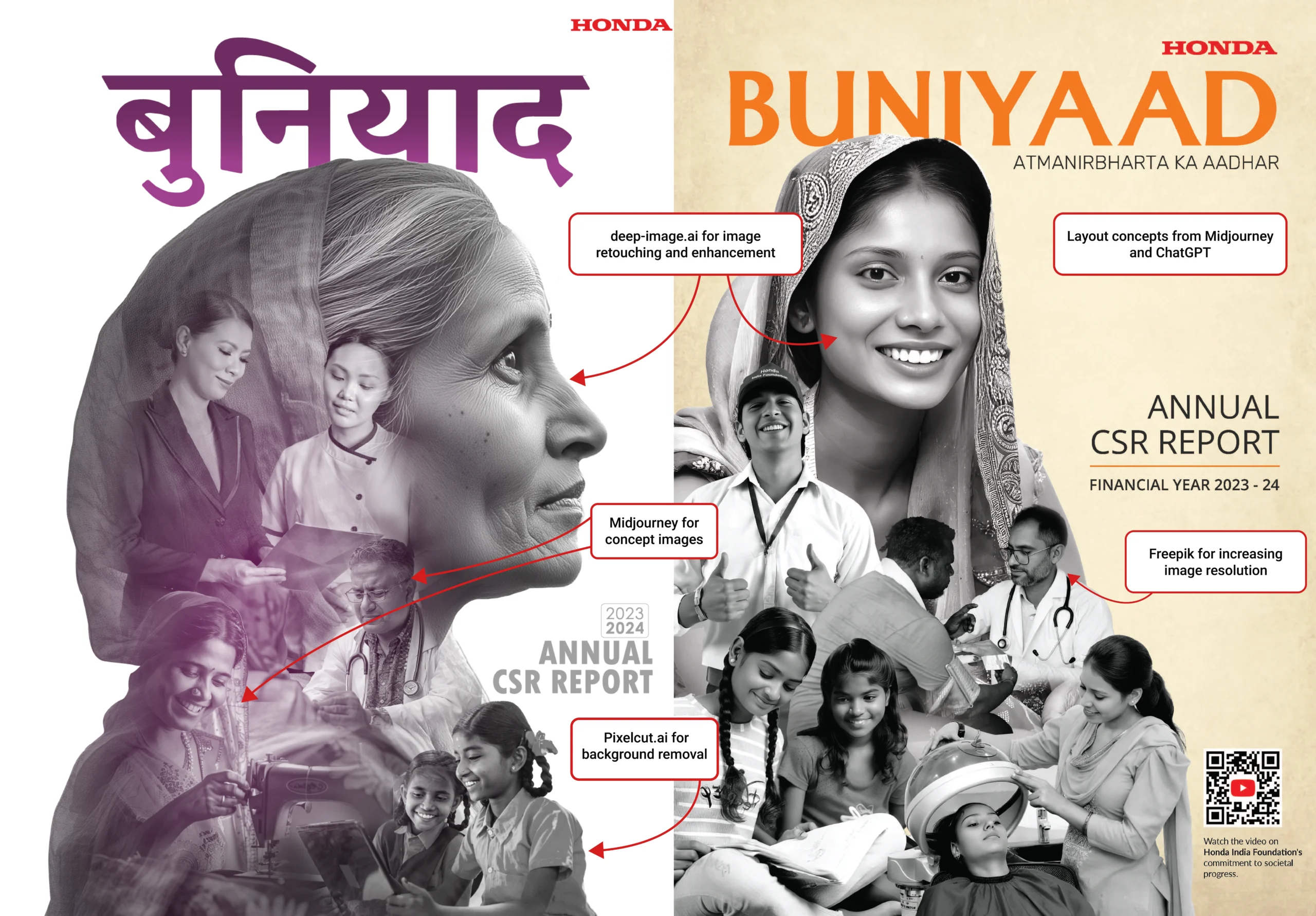
Example
And it’s not just print. Social media designers can instantly pull up loads of editable templates. For UI/UX, dozens of AI tools can whip up a solid draft with a simple prompt. Poster designs, mockups, packaging, even 3D ads—everything’s just a few clicks away nowadays, and AI tools are only getting smarter.
Here’s the blunt truth: the jobs most at risk are the basic, generic ones. The future belongs to specialists—people who pick a niche and master it—or to adaptable generalists who combine skills across multiple areas. In fact, it should take three or four AI-powered artists to try and replace someone who’s truly multidisciplinary and creative, and even then, they probably won’t come close.
So, what’s the move? Either double down on a niche or, if you’re more of a generalist like me, learn everything you can. Make it so that replacing you takes a whole team. Either way—don’t just sit idle, waiting for AI to make your job obsolete. Jump in, learn the tech, and use AI to ride forward, not get left behind. AI’s not the enemy; it’s the ride. The choice is simple: adapt and thrive, or get stuck in the past.